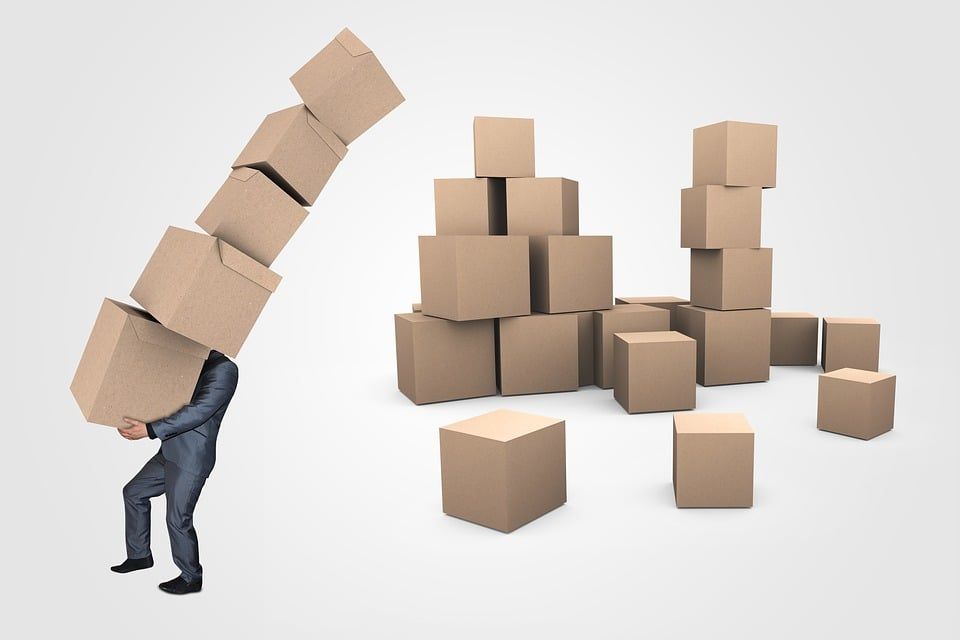
You’ve done it. You’ve found a new apartment or even a house. Now it’s time to move. You begin planning and ask yourself: “How many moving boxes do I actually need?” The answer isn’t that simple. There is no reliable formula. However, practical experience can help you with your calculation.
First of all: Declutter!
At the latest when you have decided to move, you should go through your belongings and furnishings. Does everything really need to come with you? It may make sense to go through the basement, attic and one or two rooms and “declutter” things you no longer need.
Get rid of all items and furniture that have no place in the new apartment or that you have not touched for years and are unlikely to use in the future. These things can go. Whether you dispose of them, donate them to social organizations or sell them privately depends on your preferences and their condition. Ultimately, the aim is to get rid of unwanted baggage before moving.
Option: Have the Moving Company Estimate the Number of Boxes
If you have the move handled by a service provider, there is usually an on-site appointment. This allows the company to estimate the transportation effort involved. A key aspect is the number of moving boxes. Even if you pack everything yourself, a moving expert can give you a good estimate of the number of boxes required. Better still: You will receive information about which boxes you need.
Rough Rule of Thumb: This Many Moving Boxes per Living Area
The number of boxes required depends on various factors. These include, in particular, your household contents and the living area. There are various rules of thumb based on practical experience. These include the following two standard calculations:
- Calculate 0.5 to 1 box per square meter of living area, or
- calculate 15 boxes per room plus five to ten boxes per person living in the household.
However, both formulas are only rough guidelines. Depending on the furnishings, significantly more boxes may be required. For example, if you own an entire wall full of books, you will need additional boxes. Likewise, an above-average amount of dishes and porcelain will lead toan increased need. In both cases, the items to be packed are very heavy. You should therefore not fill boxes completely, otherwise they can no longer be carried. If, on the other hand, you only have a small amount of household contents or many small and light items, the required number of moving boxes is lower.
You should therefore compare the result of the rule-of-thumb calculation with your living situation. Tip: It is better to plan for a few extra boxes. Returning or reselling them is usually straightforward. This is better than having too few boxes available shortly before the move.
Use different types of moving boxes
In addition to the number of boxes, the type of box plays an important role. There are various shapes and designs, all of which are suitable for specific purposes. The most common boxes include:
- Standard boxes: This format has a long side. These boxes are suitable as universal boxes that can also hold somewhat bulky items being moved. As a rule, this variant makes up a significant part of your packing materials.
- Book boxes: These boxes are smaller and more compact. They are suitable for transporting heavy items such as books and CDs or dishes. Book boxes should not be missing from any move.
- Glassware boxes: If you want to save yourself the elaborate process of packing glassware, glassware boxes are a good option. These have compartments that protect the glass.
- Wardrobe boxes: Wardrobe boxes are a good choice for suits, dresses and coats. These boxes have a clothes rail or hanging devices for hangers.
- Picture boxes: Paintings, large photographs and similar items can be packed well in picture boxes. These are particularly reinforced at the corners and are available in various sizes.
Also look for reinforced double bottoms, reinforced double handles, easy-to-close lids and quick assembly of the box blanks. Quality pays off: Cheap and thin boxes tear more quickly, and your household contents may be damaged.
Remember that you should also obtain filling material such as old newspapers, adhesive tape, zip bags and stickers, as well as water-resistant felt-tip pens for labeling the boxes. Small boxes without carrying handles for small items and valuables are also helpful. This prevents anything from falling out during transport.