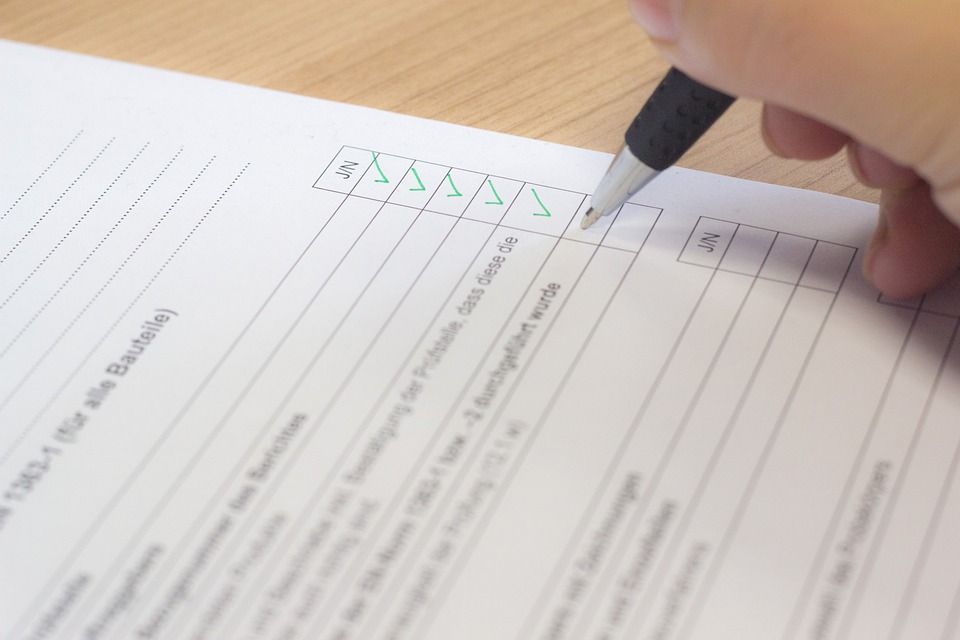
The apartment handover report is one of the most important documents when moving in and out. In it, both rental parties document the condition of the apartment, list defects, note the keys and furnishings handed over, as well as meter readings.
Although the apartment handover report is not mandatory, it may become legally relevant for you. You should insist on such a document both as a landlord and as a tenant. Both sides can thereby protect themselves and prevent disputes in advance.
Meaning: What is the purpose of an apartment handover report?
The apartment handover report is an informal document in which the landlord and tenant record the condition of the apartment as objectively as possible when changing apartments. In particular, it lists defects. Both parties sign the document and thereby guarantee that the condition of the property stated in it corresponds to the facts.
Both parties can use the apartment handover report to determine the difference in the condition of the apartment when moving in and moving out. Among other things, this determines whether cosmetic repairs are required by the tenant, who caused defects, or whether, for example, all keys handed over are still present.
A typical example of application: The landlord and tenant compare the condition of the apartment when moving in and moving out. If the condition of certain details, such as walls, door frames or flooring, has deteriorated beyond the expected wear and tear, this may result in an obligation to carry out cosmetic repairs. However: If the defect was already documented when moving in, the tenant does not have to remedy the defect.
When is an apartment handover report prepared?
There are two times when the document becomes relevant for you.
-
Both parties prepare a handover report when moving in. In this case, the landlord and tenant inspect the apartment together and record its condition in writing. As a rule, this agreement takes place after the rental agreement has been signed and when the keys are handed over. The handover must take place no later than the first day of the tenancy.
-
Both parties prepare the apartment handover report when moving out. Here too, the parties inspect the apartment together and record defects. In this case as well, the optimal time is generally when the keys are handed over. This means: The handover takes place no later than the last day of the tenancy.
Special case: Apartment handover report between tenants
If the landlord waives an inspection of the apartment between two tenancies, the previous and subsequent tenants can prepare an apartment handover report. The only difference: The subsequent tenant assumes responsibility for the documented condition of the apartment.
Time of day can be decisive!
Experience shows that you should inspect an apartment in sufficient daylight. Sunlight gives you a better view, and defects are easier to see. In dimly lit rooms in the evening or early morning, there is a risk that you will not notice scratches, dents, color variations and similar defects.
Properly completing the detailed apartment handover report
There are no official requirements for the form and content of an apartment handover report. However, it should contain at least some important points so that, in case of doubt, it meets legal requirements. Both the German Tenants’ Association and similar associations, as well as various landlord organizations, recommend similar content. The document should be based on these.
Formal content
A detailed apartment handover report should contain the following formal points:
- The address of the apartment and information about its location (apartment number, floor designation, etc.) for unambiguous identification of the property.
- The name and address of the landlord or the commissioned person/organization (e.g. property management company) and of the new or former tenant. For the address of a new tenant, this should be their previous address; for the address of the former tenant, their future address.
- The names of any other persons present at the handover (ideally including addresses), so that they can serve as witnesses in the event of disputes.
- The date and time of the apartment handover.
- The signatures of both parties to the tenancy and, where applicable, of other persons.
Content describing the condition
In addition, a detailed apartment handover report should contain the following details describing the condition of the property:
- The report should contain a detailed description of the condition of all rooms. Ideally, you should list the rooms and divide them into different areas. Checkboxes in two categories, such as “no defects” and “defects,” together with an additional line for explanations, are very suitable for this. With in these boxes, both parties should record the condition of all rooms and all individual areas such as floors (stating the type of flooring), walls, ceilings, windows, skirting boards, radiators/pipes and doors. Depending on the apartment, this results in a relatively long list of individual items.
- In the same way, record the condition of usable areas such as balconies, terraces, cellars, attics or garden sheds.
- As a separate item or under the respective rooms, provide details of any identifiable defects in light switches, sockets, doorbells or TV and telephone connections.
- Note the current meter numbers and readings for electricity, gas and water (where applicable), as well as the remaining quantity of energy sources (heating oil, gas, wood).
- List the number of keys handed over and their function (front door, apartment door, cellar lock, letterbox, etc.). If one or more keys have been deposited with third parties, this must also be noted. This may be the case, for example, if a trades company has received a key when commissioned to carry out cosmetic repairs. Important regarding keys: When moving out, the tenant must hand over all keys. This also applies to duplicate copies. When moving in, the landlord must hand over all existing keys to the new tenant.
- If operating instructions, such as those for smoke detectors, heating systems or similar devices, are handed over, list them informally in the document.
- If furnishings such as a kitchen, cupboards or similar items are part of the tenancy agreement, you should list them—where applicable, including any identifiable defects. Their functionality should be tested and documented during handover.
Do not forget: Both parties receive one copy each!
Practical tip: checking the right boxes and making notes
As long as all rooms are in perfect condition, checking “no defects” is correct. But what happens if there are recognisable signs of use or areas with mould or chipped paint? In this case, check “defects” and describe the defect as precisely as possible in the additional line. During the inspection, you should pay particular attention to small “blemishes” that could later lead to a serious dispute. While a small scratch on the door frame is usually insignificant, overlooked defects of another kind could result in costly rework. For example, difficult-to-remove mould in the bathroom requires a a defective window seal or a hole in the parquet, as well as painting work required with oil-based paint, are often costly tasks. If you do not record such “minor issues” in the report, this can later become expensive for you as a tenant when you move in. When moving out, however, you as the landlord will be left with the costs of rectifying them.
The following therefore applies: Only if the problem is identified in the report can the question of who caused it be clarified. This is the prerequisite for obliging the tenant to remedy it.
Record differing opinions in the event of disagreement
The purpose of the inspection is to record the condition of the apartment as objectively as possible. However, it is not always clear whether, for example, a skirting board merely appears slightly worn or is damaged. If there is a difference of opinion, both parties have the right to include a differing assessment in the report. Remember to substantiate disputed points with photographs wherever possible.
Important: Since both parties sign the apartment handover report, you may not ignore a differing opinion.
Additional agreements and defects discovered later
You should also record verbal agreements in the report. If one party agrees to remedy a defect, this should be evident from the document. The same applies to waiving the remedy.
Defects or promises that have not been recorded in writing are problematic in this context. If, for example, one party to the contract fails to comply with verbal agreements, the other party must prove this failure. The same applies to defects discovered later. Therefore: You should record all agreements.
What happens if there is no agreement?
Since an apartment handover report is not legally mandatory, you can dispense with this document. However, in case of doubt, it then becomes one person’s word against the other’s.
If one party refuses to jointly document the condition of the apartment, the other party can call in a tradesperson or expert to document defects. A neutral third party, such as a neighbor, can also generally act as a witness in this role. Important: The inspection of the apartment should take place during the handover and therefore immediately before or afterward in terms of timing. The longer the interval between them, the less clarity there is about the actual condition of an apartment.
Conclusion: Don’t rely on "do without the apartment handover report!
A clear list of defects is part of proper practice when changing tenants. More than that: documenting them creates mutual binding force and a degree of legal certainty.
The landlord can no longer claim later that the tenant damaged the apartment or failed to carry out necessary cosmetic repairs. The tenant cannot complain about defects that they should have noticed when the apartment was handed over. In addition, the document helps determine the wear and tear between moving in and moving out and any cosmetic repairs that may be required.
Important: Do not sign this document until the apartment is handed over. Do not agree to a handover without a report. The handover of the keys and the detailed description of the condition form a single unit on the day the apartment is handed over.