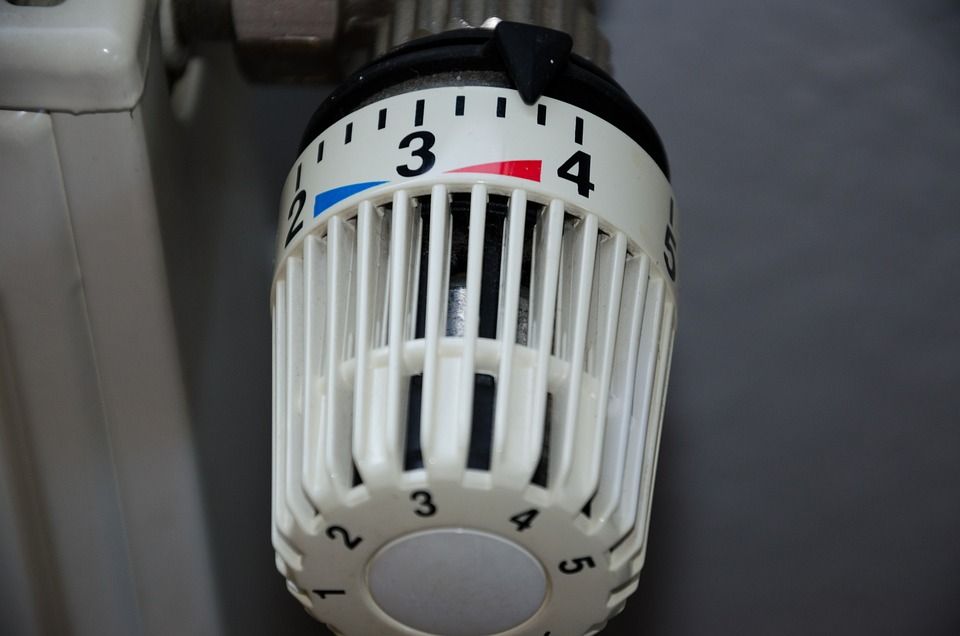
Heating costs are a significant cost factor for rental properties. Together with other energy and operating costs, they are part of the so-called “second rent”. Billing is either handled directly between the tenant and the utility provider or as part of the annual heating and/or ancillary-cost statement. Disputes repeatedly arise between tenants and landlords. We provide clarification: How can heating costs be calculated, and what requirements apply?
The legal basis is the Heating Costs Ordinance
Pursuant to § 2 point 4 of the Operating Costs Ordinance (BetrKV), the landlord may apportion the costs of hot water and heating to the tenants. Exactly what constitutes heating costs and how landlords may bill them is set out in the Heating Costs Ordinance (HeizkostenV).
Important: The ordinance applies only to rented apartment buildings with central heating or district heating. Excluded are two-family houses in which the owner lives, as well as buildings supplied predominantly by renewable energies (solar, wind, heat pumps, combined heat and power), passive houses (with energy requirements of less than 15 kWh/sq m), student residences and similar buildings, as well as houses in which installing metering equipment would be disproportionately expensive.
New Heating Costs Ordinance
The statutory text has meanwhile been modified or supplemented by the ordinance on the amendment of the Heating Costs Ordinance. The amendments have applied since December 2021. The following explanations take both legal bases into account.
What are heating costs?
In many statements, the largest cost item consists of the pure energy costs, including delivery costs, for gas, oil, district heating, wood or similar fuels. However, the term covers considerably more expenses. The following can also be apportioned, for example:
- the costs of hot water provided by the heating system,
- the electricity required for operation,
- expenses for maintenance work,
- costs for cleaning the system and the boiler room,
- chimney-sweep costs,
- service costs incurred (meter readings by third parties).
How may heating costs be calculated?
The Heating Costs Ordinance applies only to rental apartments that are heated via be supplied by a central heating system or district heating. Many tenants assume that the costs must be billed according to consumption. However, this is not correct. Section 6 of the Heating Costs Ordinance provides a framework for billing. Accordingly, at least 50 percent of the costs must be billed according to consumption. The remaining costs incurred, especially consumption-independent items such as maintenance or cleaning, may be apportioned by the landlord according to the respective residential and usable floor area. As a result, tenants with a larger apartment pay proportionally somewhat more heating costs than tenants with a small apartment. The basis for billing must be specified in the rental agreement. Experience shows that the proportion of costs billed according to consumption is up to 70 percent.
How are heating costs to be determined?
Another important point is determining consumption. This is also a frequent source of disputes between tenants and landlords. The amended Heating Costs Ordinance referred to above is intended to address this issue. It specifies the billing models that the landlord must use.
Under the provisions amended since the end of 2021, landlords must generally measure consumption. This is possible using so-called heating cost meters or heat cost allocators. For this purpose, a suitable recording system must be installed and used in the apartments and the heating technology. The amending ordinance also requires the data to be read remotely. The remote-reading technology must function independently of the manufacturer, meaning it must be “interoperable” and “smart-meter-gateway-compatible” (SMGW). If remote reading of consumption quantities is not yet possible, such devices must be retrofitted by the end of 2026. An extended deadline until the end of 2031 applies to non-compatible systems installed one year before or after the amended Heating Costs Ordinance entered into force.
Important: The billing must be based on measured data. Pure estimates are no longer permitted. This means that the tenant must accept the installation of meters or other technologies.
When must heating costs be determined?
Since the consumption data accumulated mainly occurs in winter, the data must be recorded and communicated to tenants at least twice a year. In the case of electronic data transmission or at the tenant’s request, the landlord is obliged to provide this data quarterly. Since January 2022, remotely read data must even be transmitted monthly.
What must include the notification of heating costs?
In addition to the obligation to enable remote readings, landlords are subject to requirements regarding which information they must also provide. These include:
- consumption in kWh,
- energy/fuel costs,
- fuel and its composition,
- information on the CO2 emissions caused,
- comparison of the current data with the previous year (climate-adjusted),
- comparison of the current data with the user category (climate-adjusted).
This information is intended to provide tenants with more details about their heating behaviour. In particular, the comparison with the previous year and with typical other users (tenants) is intended to help illustrate potential savings and optimise one's own behaviour during the heating period.
When are heating costs settled?
Irrespective of the notification obligation, heating costs are generally settled once a year. As a rule, the tenant makes a monthly advance payment as part of the so-called ancillary costs, which is then offset against the costs. The settlement of heating costs is generally part of the operating costs settlement.
The following requirements apply:
- The landlord must settle the heating costs for one year.
- The billing year does not have to be identical to the calendar year (e.g. it is permissible to settle costs from March to February).
- The settlement must contain the above-mentioned information from the consumption notifications as well as, among other things, consumption, the fuel category, total costs, ancillary costs, the cost allocation key, the size of the heated living space, the advance payments made and the resulting difference.
- The settlement must be available no later than twelve months after the end of the billing period.
- If claims against the tenant arise beyond the ancillary cost flat-rate payments made, these must also be asserted one year after the end of the billing period. Credits for the tenant, on the other hand, may still be paid out later.
- Tenants may object to the settlement for up to one year after it has been issued.
Special feature: Change of tenant during the billing period
Tenant changes do not always take place at the end of a billing period. The following applies to changes “during the year”: Each tenant pays only the share of heating costs incurred during their contractual rental period. It is irrelevant whether the apartment was vacated early or occupied late. The The landlord must determine consumption values when the tenant moves in and out, but must not bill them prematurely. The departing tenant must wait until the regular billing.
Special feature: Who pays for vacancy?
When a tenant moves, a rental property may remain vacant for an extended period. This vacancy must not be at the expense of the other tenants. For this period, the landlord must determine the total heating costs incurred for this apartment as usual. However, the calculated amount is borne by the landlord. They may not apportion it among the other tenants, but must deduct it from the total heating costs. This also includes prorated costs such as maintenance, cleaning and data reading.